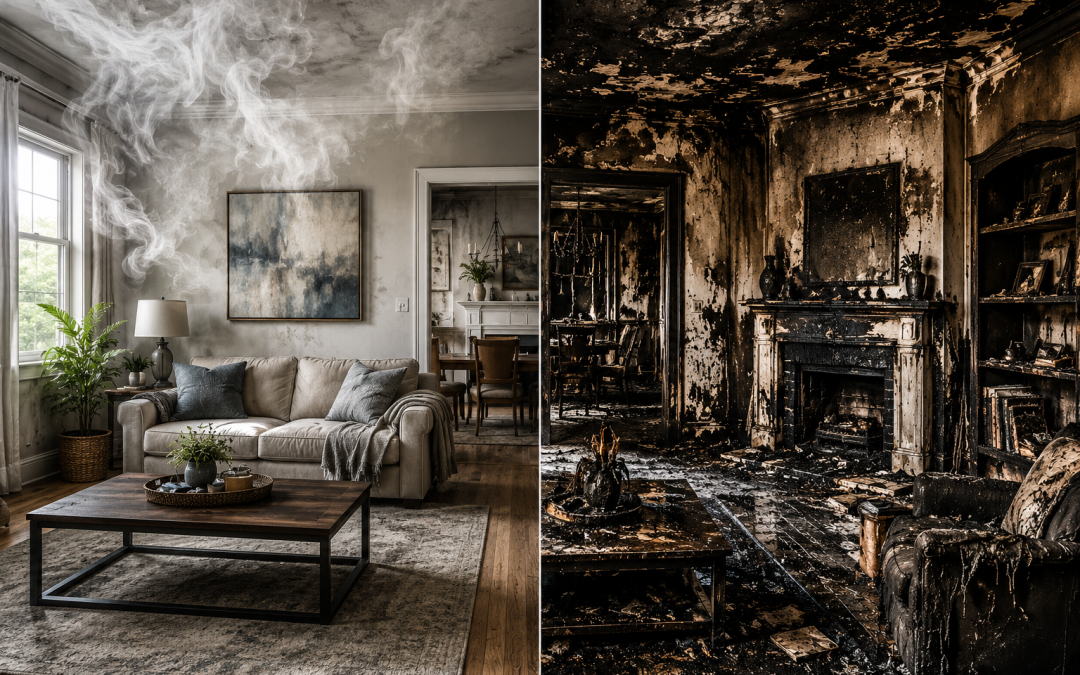
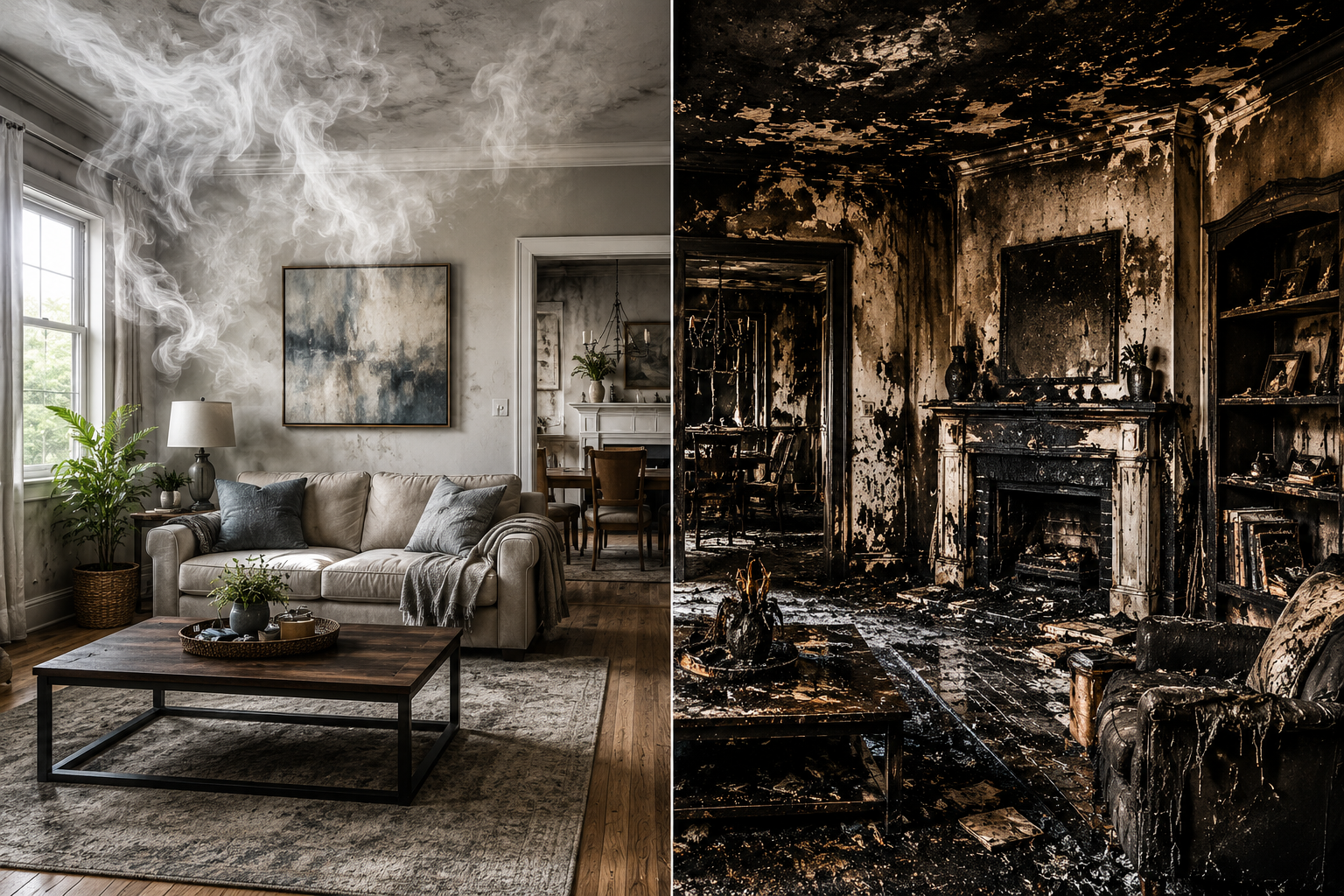
After a fire, the visible damage is only part of the problem. Lingering smoke odors and layers of soot can continue to affect your home long after the flames are extinguished. While smoke and soot are often mentioned together, they are very different types of fire damage that require separate cleaning methods and restoration approaches. Understanding the difference is important because improper cleanup can lead to permanent staining, corrosion, poor indoor air quality, and ongoing health risks.
Smoke consists of airborne gases and tiny particles created during combustion, while soot is the dark, powdery residue left behind after materials burn incompletely. Both can spread throughout a property within minutes, affecting walls, furniture, electronics, HVAC systems, and personal belongings, even in rooms untouched by the fire itself. Knowing how smoke and soot damage behave can help homeowners respond quickly, minimize long-term damage, and choose the right professional restoration services after a fire.
What Is Smoke Damage?
Smoke damage refers to the contamination left behind by smoke after a fire. Even a small fire can produce large amounts of smoke that quickly travel through a home or business. Because smoke consists of microscopic particles and gases, it can spread far beyond the immediate fire area, reaching rooms, hallways, vents, and hidden spaces within minutes.
One of the biggest challenges with smoke damage is how deeply smoke particles can penetrate porous materials. Walls, ceilings, insulation, furniture, curtains, carpets, and clothing can all absorb smoke residue and odor. Smoke can also enter HVAC systems, allowing particles and odors to circulate throughout the property long after the fire has been extinguished. In many cases, areas that appear untouched by flames may still experience significant smoke contamination.
The effects of smoke damage can linger if not properly cleaned and deodorized. Persistent smoky odors are among the most common problems homeowners notice after a fire. Smoke can also leave behind yellow or brown discoloration on walls and ceilings, dull finishes on surfaces, and unpleasant indoor air quality. Exposure to lingering smoke particles may irritate the eyes, throat, and lungs, especially for children, older adults, and individuals with respiratory conditions.
What Is Soot Damage?
Soot damage is caused by the fine black residue left behind after incomplete combustion during a fire. When materials such as wood, plastic, paper, fabric, or fuel do not burn completely, they release tiny carbon particles that settle onto surfaces throughout the property. Unlike smoke, which remains airborne for a period of time, soot eventually clings to walls, ceilings, furniture, flooring, appliances, and personal belongings.
There are several different types of soot, and each requires a specific cleaning approach:
- Dry soot: Powdery and commonly produced by fast-burning, high-temperature fires.
- Oily soot: Often resulting from low-oxygen fires or burned plastics, is sticky and much harder to remove.
- Protein residue soot: Comes from kitchen fires involving food or grease and may leave behind strong odors and discoloration despite being less visible.
- Fuel oil soot: Typically associated with furnace puff backs or oil burner malfunctions, creates dense black residue that spreads quickly through a building.
One of the biggest concerns with soot damage is how easily it adheres to surfaces and penetrates materials. Soot can smear when touched or cleaned improperly, making stains worse and more difficult to remove. In addition to staining walls, ceilings, fabrics, and countertops, soot is often acidic, which means it can corrode metal surfaces, damage electronics, discolor plastics, and permanently harm valuable belongings if cleanup is delayed. The longer soot remains in the property, the greater the risk of lasting damage.
Key Differences Between Smoke and Soot Damage
Although smoke and soot damage are both caused by fire, they affect properties in very different ways. Understanding these differences is important because each type of damage requires a unique cleanup and restoration process.
Composition
Smoke is made up of airborne gases and microscopic particles released during combustion. Because these particles are so small, smoke can easily move through a property and penetrate porous materials.
Soot, on the other hand, is a solid carbon-based residue created when materials do not burn completely. It settles onto surfaces after the fire and often contains toxic chemicals and acidic compounds.
Appearance
Smoke damage is not always immediately visible. In many cases, homeowners notice lingering smoky odors, yellow or brown discoloration on walls and ceilings, or a hazy film on surfaces.
Soot damage is usually more visible and appears as black, gray, or oily residue coating surfaces throughout the property. Depending on the type of fire, soot may feel dry and powdery or sticky and greasy.
How They Spread
Smoke spreads rapidly through the air and can travel far beyond the fire’s origin. It often reaches hidden areas such as inside cabinets, behind walls, and through HVAC ductwork.
Soot particles eventually settle and cling tightly to surfaces, including furniture, electronics, fabrics, and flooring. Because soot adheres so easily, it can continue causing damage long after the fire is extinguished.
Cleanup Requirements
Smoke damage cleanup typically focuses on odor removal and improving indoor air quality. Professional restoration companies may use air scrubbers, thermal fogging, ozone treatments, and deodorization techniques to remove smoke particles and smells from the property.
Soot cleanup requires specialized cleaning methods because improper wiping or scrubbing can smear the residue and permanently stain surfaces. Restoration professionals use industry-approved products and techniques to safely remove soot without causing additional damage.
Why the Difference Matters
Understanding the difference between smoke and soot damage is important because each poses unique risks to both your health and your property. Identifying the type of fire damage present helps ensure the cleanup process is handled correctly and prevents long-term problems from developing after a fire.
Health Risks
Both smoke and soot can negatively affect indoor air quality and create health concerns for occupants. Smoke particles are extremely small and can remain suspended in the air, where they may irritate the eyes, throat, and lungs. Exposure to lingering smoke residue can trigger coughing, headaches, asthma flare-ups, and other respiratory issues, especially in children, older adults, and individuals with existing breathing conditions.
Soot can be even more hazardous because it often contains toxic chemicals, heavy metals, and carcinogens released during the burning of plastics, synthetic materials, and household products. Contact with soot or inhalation of soot particles may cause skin irritation and respiratory complications, making professional cleanup essential after a fire.
Property Damage
Smoke and soot can both damage a property, but soot is especially destructive because of its acidic nature. Soot can permanently stain walls, ceilings, carpets, upholstery, and personal belongings if not removed quickly. In addition to visible staining, acidic soot residue may corrode metal surfaces, tarnish fixtures, damage electronics, and weaken appliances over time.
Smoke damage can also linger long after the fire is extinguished. Odors trapped inside walls, furniture, and HVAC systems may continue circulating throughout the property, making the environment uncomfortable and potentially unsafe without proper deodorization and air cleaning.
Restoration Costs
The longer smoke and soot damage remain untreated, the more extensive and expensive the restoration process can become. Soot continues to spread and corrode surfaces over time, while smoke odors become more deeply embedded into materials. Delayed cleanup may lead to permanent damage that requires replacement instead of restoration.
Properly identifying whether damage is caused primarily by smoke, soot, or both allows restoration professionals to use the most effective cleaning methods and equipment. Targeted restoration not only improves cleanup results but can also help reduce repair costs and prevent future issues within the property.
Common Areas Affected by Smoke and Soot
Smoke and soot can spread quickly throughout a property during a fire, affecting far more than the area where the flames originated. Because smoke particles travel through the air and soot settles onto surfaces, damage can appear in both visible and hidden areas throughout the home or business.
Walls and Ceilings
Walls and ceilings are among the most commonly affected surfaces after a fire. Smoke can leave behind yellow or brown discoloration, while soot often forms dark stains and residue that cling tightly to painted surfaces. Over time, acidic soot can cause permanent staining and deterioration if not cleaned promptly.
Upholstery and Carpets
Soft materials such as upholstered furniture, rugs, curtains, and carpets easily absorb smoke particles and odors. Even if there is no visible residue, fabrics may continue releasing smoky smells long after the fire. Soot can also become embedded in fibers, making professional cleaning necessary to fully restore these materials.
HVAC Systems and Ductwork
Smoke frequently enters HVAC systems and air ducts during a fire. Once inside, smoke particles and odors can continue circulating throughout the property whenever the system runs. Soot buildup inside ductwork may also reduce indoor air quality and spread contamination to rooms untouched by the fire itself.
Electronics and Appliances
Electronics and household appliances are highly vulnerable to soot damage. Fine soot particles can enter internal components, where acidic residue may corrode wiring, circuit boards, and metal surfaces. Even devices that appear unaffected externally may suffer hidden damage that impacts performance or creates safety concerns later on.
Clothing and Personal Belongings
Clothing, bedding, books, photographs, and other personal belongings can absorb smoke odors and become stained by soot. Certain materials are especially porous, making odors difficult to remove without specialized cleaning techniques. Fast restoration efforts can often help save sentimental and valuable items before permanent damage occurs.
Why DIY Cleanup Can Make Damage Worse
After a fire, many property owners attempt to clean smoke and soot damage themselves in an effort to save time or money. However, improper cleanup methods can often make the damage worse and increase restoration costs. Smoke and soot require specialized handling because the residue is delicate, corrosive, and capable of spreading easily throughout the property.
One of the most common mistakes during DIY cleanup is rubbing or scrubbing soot-covered surfaces. Soot particles are extremely fine and oily, so wiping them incorrectly can push the residue deeper into walls, fabrics, carpets, and upholstery. Instead of removing the damage, scrubbing may smear the soot and create permanent stains that become much more difficult to restore.
Using standard household cleaners can also cause problems. Many cleaning products are not designed to treat fire-related residue and may react poorly with soot. Certain chemicals can set stains, damage surfaces, or create discoloration when combined with acidic soot particles. Delicate materials such as painted walls, electronics, wood finishes, and fabrics are especially vulnerable to improper cleaning techniques.
Smoke odor removal is another challenge that DIY methods often fail to address completely. Simply masking odors with sprays or air fresheners does not eliminate the smoke particles trapped inside porous materials and HVAC systems. Without professional deodorization and air purification, lingering smoke contamination can continue affecting indoor air quality and leave the property with persistent odors long after cleanup appears complete.
How Professional Fire Damage Restoration Helps
Professional fire damage restoration is essential for fully removing smoke and soot contamination after a fire. Because fire damage often affects both visible and hidden areas of a property, restoration professionals use specialized equipment, cleaning products, and proven techniques to restore the home safely and effectively.
Inspection and Damage Assessment
The restoration process typically begins with a detailed inspection of the property. Professionals assess the extent of smoke, soot, and structural damage to determine which materials can be restored and which may need replacement. This evaluation also helps identify hidden contamination inside walls, ceilings, insulation, and HVAC systems that may not be immediately visible.
Smoke Odor Removal and Air Scrubbing
Removing smoke odors requires more than simply airing out the property. Restoration professionals use industrial air scrubbers, HEPA filtration systems, thermal fogging, and deodorization treatments to eliminate smoke particles from the air and surrounding materials. These methods help improve indoor air quality and prevent lingering odors from returning over time.
Soot Cleaning and Surface Restoration
Soot removal must be handled carefully to avoid spreading residue or damaging surfaces. Restoration technicians use specialized cleaning methods based on the type of soot present and the materials affected. Walls, ceilings, flooring, furniture, and other surfaces are cleaned using industry-approved products designed to safely remove soot without causing additional staining or corrosion.
Content Cleaning and Restoration
Many personal belongings can often be saved with professional restoration techniques. Clothing, upholstery, electronics, documents, photographs, and other valuable items may undergo deep cleaning, deodorization, and specialized restoration treatments. Fast response times are especially important for increasing the chances of recovering sentimental or expensive belongings.
Structural Cleaning and Repairs
In addition to surface cleaning, fire damage restoration may include structural repairs to fully restore the property. Damaged drywall, insulation, flooring, cabinets, and other building materials may need repair or replacement. Restoration professionals work to return the property to a safe, clean, and livable condition while helping prevent long-term issues caused by smoke and soot contamination.
Fire and Smoke Damage Restoration from ServiceMaster S&R Systems
Smoke and soot damage can continue affecting your property long after a fire is extinguished. While smoke leaves behind odors and airborne contamination, soot can stain surfaces, corrode materials, and create serious health concerns if not properly removed. Understanding the difference between the two is important for ensuring the right cleanup methods are used and preventing long-term damage to your home or business.
Because fire damage spreads quickly and often affects hidden areas, professional restoration is the safest and most effective way to restore the property. Fast action can help minimize permanent damage, improve indoor air quality, and increase the chances of saving valuable belongings.
If your home or business has been affected by fire, smoke, or soot damage, contact ServiceMaster S&R Systems for professional fire damage restoration services. Our experienced technicians provide comprehensive cleanup, smoke odor removal, soot cleaning, and structural restoration to help return your property to a safe and livable condition.
Give us a call at (630) 896-0030 for smoke and soot damage restoration in Aurora, Naperville, and Joliet, IL and the surrounding areas of Kane, Kendall & Will Counties.
Smoke and Soot Damage FAQs
Is soot more dangerous than smoke?
Soot is often considered more hazardous because it can contain toxic chemicals, heavy metals, and carcinogens depending on what burned. It also tends to be acidic, which means it can cause ongoing damage to surfaces and materials. Smoke is still dangerous, especially to the respiratory system, but soot poses a greater risk for both health exposure and long-term property damage.
Can smoke damage exist without visible soot?
Yes. Smoke damage can absolutely exist without visible soot. Smoke is made up of microscopic particles and gases that can penetrate walls, fabrics, and HVAC systems without leaving obvious residue behind. Even when surfaces look clean, lingering smoke odor and indoor air contamination may still be present.
How long does smoke odor last after a fire?
Smoke odor can last for weeks, months, or even longer if it is not properly treated. The smell becomes trapped in porous materials like drywall, carpets, furniture, and insulation. Without professional deodorization and air purification, smoke odors can persist indefinitely and may worsen in humid conditions.
Can soot permanently damage electronics?
Yes. Soot can permanently damage electronics. The fine particles can enter internal components and cause corrosion, short circuits, or overheating issues. Because soot is often acidic, even small amounts can degrade circuit boards and wiring over time, sometimes making devices unsafe or unusable.
How soon should fire damage cleanup begin after a fire?
Fire damage cleanup should begin as soon as it is safe to re-enter the property, ideally within 24 to 48 hours. Smoke and soot continue to spread and cause damage over time, so delaying cleanup increases the risk of permanent staining, corrosion, and odor absorption. Prompt professional restoration helps minimize damage and improves recovery outcomes.
