Water Damage Restoration in Yorkville, IL
ServiceMaster of Kendall County provides 24/7 water damage restoration in Yorkville, IL from its office at 720 N Bridge St: emergency extraction, structural drying to a measured standard, antimicrobial treatment, and insurance-documented mitigation through rebuild. Call (630) 553-6650; active losses are dispatched on a priority basis.

Burst pipe, failed sump, or a water heater that let go overnight: call any hour. Arrival depends on time of day, roads, and how many losses are already in progress.
- 24/7 emergency line
- Certified restoration technicians
- Documented for your insurer
- Mitigation through reconstruction
- Office720 N Bridge St, Yorkville, IL 60560
- Emergency line(630) 553-6650, answered 24/7
- Service areaYorkville and all of Kendall County
- IncludedExtraction, drying, antimicrobial, insurance file, rebuild
Water still coming in? Close the main shut-off, cut power to the wet area only if the panel is dry, and keep people and pets off soaked floors. Then call.
What does a Yorkville water damage restoration job include?
Six things on every job, from extraction to the insurance file.

Water extraction
Truck-mounted and portable extractors pull standing water from carpet, pad, hard flooring, and slabs.
Structural drying & dehumidification
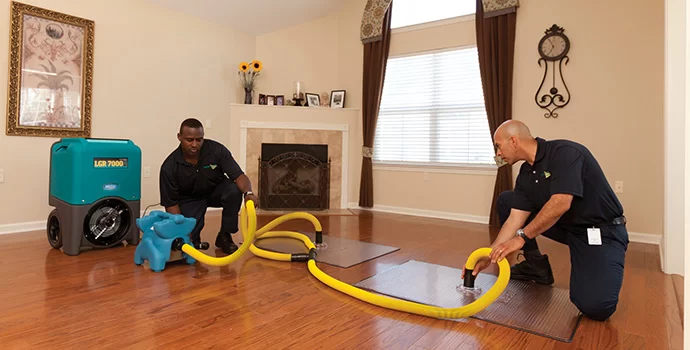
Air movers and LGR dehumidifiers run until framing, subfloor, and drywall meet a measured dry standard.
Moisture mapping
Meters and thermal imaging trace where water traveled, including hidden joist bays and toe-kicks.
Antimicrobial & mold prevention
Affected surfaces are treated; anything that cannot dry in place comes out under HEPA containment.
Contents and salvage
Wet contents are inventoried and moved; hardwood, cabinetry, and trim dry in place when readings allow.
Insurance coordination
Photos, moisture logs, equipment counts, and a written scope go to your adjuster from one file.
How does the drying process work, from first call to final reading?
Five steps, each logged in the same restoration file your adjuster receives.
Call and stabilize
Dispatch logs the source and safety concerns and coaches shut-off while the crew loads.
Inspect and classify
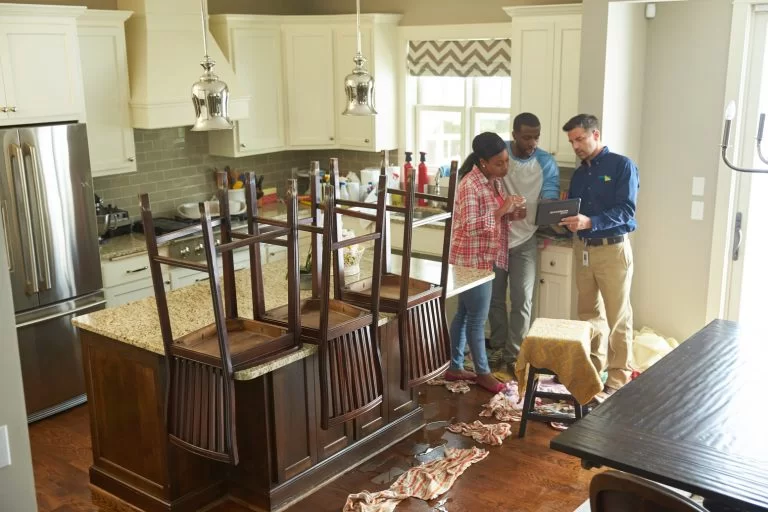
The lead tech grades the water clean, grey, or black and scopes the wet footprint.
Extract and protect
Standing water comes out, contents move, and unsalvageable materials are removed under containment.
Dry and monitor
Equipment runs around the clock; readings are logged room by room until dry standard.
Closeout and rebuild
Final scope, photos, and logs go to your carrier; reconstruction picks up where mitigation ends.
What causes water damage in Yorkville homes, and how do you know it is still wet?
Sump pumps, frozen lines, and appliance hoses cause most Yorkville losses.
Usual sources behind Yorkville water losses
- Sump pump failure during spring storms
- Burst supply lines in January cold snaps
- Water heater tank ruptures
- Dishwasher, icemaker, and washer hose failures (how appliance leaks start)
- Upper-floor toilet or tub overflow
- Roof and window leaks after wind-driven rain
- Sewer backups (Category 3 water)
Signs the structure is still holding water
- Musty odor days after cleanup
- Swollen baseboard or door casing
- Soft drywall or bubbling paint
- Hardwood cupping at the edges
- Unexplained warm spot on a slab floor
- Sump pit that cannot keep up in ordinary rain
What do Category 1, 2 and 3 water mean for a Yorkville cleanup?
The category grades how contaminated the water is, and it decides what can dry in place and what has to come out.
Category 1: clean water
A split supply line, a leaking icemaker tube or a water heater that let go releases sanitary water. Carpet, pad, drywall and hardwood can often be dried where they sit, provided extraction begins before the water picks up dirt or sits long enough to be graded up. Most burst-pipe calls during a Yorkville cold snap start in this category.
Category 2: grey water
Washer and dishwasher discharge, an aquarium spill, a toilet overflow without waste, or sump water that has spread across a basement floor carries enough contamination to make people ill. Wet carpet pad is usually pulled, hard surfaces are cleaned and given an antimicrobial treatment, and drying resumes once the soiled material is gone.
Category 3: black water
Sewer backups, Fox River or groundwater flooding, and toilet overflow with waste are handled as unsanitary from the start. Porous materials it reached, including carpet, pad, insulation and the lower drywall, are bagged and removed under containment, then the remaining structure is cleaned and disinfected before drying starts.
Water rarely keeps its first grade. Clean water that sits for a couple of days, or runs through a wall cavity and across a dusty slab, moves up a category, so the lead technician records the grade on the first visit and again whenever conditions change. That note goes into the restoration file, and it is the main reason two leaks of the same size can end in very different scopes. Basement water that rose through a floor drain is usually Category 3; our flooded basement cleaning in Yorkville covers that below-grade work in more detail.
What should you do, and not do, before the crew arrives?
A few safe steps protect the house and the claim; a few common reactions make the job bigger.
Steps that help while you wait
- Find the main shut-off, usually where the water line enters the basement or crawlspace, and close it if you can reach it without wading.
- Turn off breakers for the wet rooms only while standing on a dry floor; if the panel area is wet, leave it and mention it on the call.
- Photograph and film the water, the source and anything damaged before it is moved.
- Set furniture legs on foil or scrap wood, and carry rugs, paperwork and electronics to a dry room.
- Open interior and cabinet doors so air can circulate, and leave the thermostat at its normal setting.
- Call your insurance carrier to open a claim and keep the claim number handy for our technician.
Things to hold off on
- Running a household or shop vacuum over standing water.
- Entering a room where water reaches outlets, cords or appliances that are still plugged in.
- Switching on ceiling lights or fans under a wet ceiling.
- Discarding damaged belongings before they are photographed and listed for the adjuster.
- Tearing up carpet, cutting drywall or aiming a fan at water from a sewer line yourself.
- Painting over a water stain or closing a wall before meter readings confirm it is dry.
What drives the cost of water damage restoration in Yorkville?
Every loss is scoped on site; four factors move the number most:
- Category of water. Grey and black water need tear-out and disinfection; clean water rarely does.
- Square footage and materials. Hardwood, insulation, and finished basements need more equipment and drying days than tile on slab.
- How long the water sat. Mold can seed within 24 to 48 hours, turning drying into remediation.
- Rebuild scope. Drywall, flooring, cabinetry, and trim replaced after drying.
Handling the insurance claim
Sudden losses like a burst pipe are usually covered; slow seepage and groundwater often are not. Either way we log the loss, send the scope to your adjuster, and answer their questions. Coverage and deductible are your adjuster’s call. Start with a call or a service request.
Where do ServiceMaster of Kendall County crews respond?
Crews cover Yorkville and every Kendall County township from 720 N Bridge St on the Route 47 corridor. Older homes near the Fox River and subdivisions like Grande Reserve, Bristol Bay, and Windett Ridge mostly ride on a single sump pump; spring storms and January freezes drive most calls.
See Kendall County water damage restoration for the townships and Yorkville restoration services for everything beyond water.
- Yorkville
- Oswego
- Plano
- Bristol
- Boulder Hill
- Montgomery
- Newark
- Sandwich
- Millbrook
- Lisbon
“Cannot say enough about Nate and Dave as our contacts for mitigation following a major storm. Both men checked in regularly, were prompt in answering question by phone, email and in person. They were thorough and professional and always reliable.”
— James B., published ServiceMaster testimonial
Extractors, dehumidifiers and air movers for Kendall County water losses load out of our shop at 720 N Bridge St in Yorkville. Use the map for directions, and the Google listing for office hours and recent reviews.
Feedback from ServiceMaster restoration customers
“Jeremy was very responsive, knowledgeable, and professional when we had some water damage in our basement! Would highly recommend working with him and his team!!”
“After a major water leak caused significant damage to our home… They walked us through every step of the process—restoration, cleanup, drying, and even coordinating with our insurance company.”
“We had a water leak in our home, and ServiceMaster of Kendall County went above and beyond… They quickly removed all the damaged flooring and handled the cleanup with true professionalism.”
More reviews and hours are on the ServiceMaster of Kendall County Google profile.
Related restoration services in Yorkville
Water damage questions Yorkville homeowners ask
Should I call before the water has stopped?
Yes. Close the main shut-off if you can reach it safely, then call; extraction can start while a plumber handles the source.
How long does structural drying take?
Most clean-water losses reach dry standard in three to five days; saturated basements and hardwood dried in place run longer. Daily meter readings decide when equipment comes out.
Do you work directly with my insurance company?
Yes. The written scope, photos, and moisture logs go to your adjuster, and we answer their questions directly.
Can hardwood floors and drywall be saved?
Often: hardwood dries in place when floor mats are staged early. Drywall below the water line on grey or black water is usually replaced.
What if mold has already started?
If growth is visible on arrival, the job adds containment, HEPA filtration, and mold remediation alongside the drying.
Do you handle the rebuild after drying?
Yes. Drywall, flooring, trim, and cabinetry are rebuilt under the same restoration file, so there is no second contractor to line up.
Is basement water in Yorkville safe to clean up on my own?
Clean water from a broken supply line carries less risk, but water that crossed a basement floor or came up through a floor drain is usually graded Category 2 or 3. Stay out if outlets or appliances are wet, and leave any sewage contact to a crew in protective gear.
Should I run fans before the crew gets there?
Opening doors is fine. If the water came from a sewer line, a floor drain or outdoor flooding, hold off on fans because moving air can spread contamination; with clean water from a pipe, a fan on a dry floor will not hurt.
Standing water in Yorkville right now?
24/7 emergency line, priority dispatch, and a documented drying plan your insurer can use.
