
How to Remove Mold From Floor Boards
Mold on floor boards needs the right method matched to the depth — surface, sub-finish, or subfloor. The wrong approach makes it worse. This guide gives you the direct answer first, then the details if you need them.
Quick Answer: How to Remove Mold From Floor Boards
- Find and stop the moisture source — leak, humidity, condensation. Cleaning without this guarantees regrowth.
- Wear PPE — N95 respirator, nitrile gloves, sealed goggles.
- HEPA-vacuum the area slowly. Standard vacuums spread spores.
- Wipe with one of these — white vinegar 1:1 with water, 3% hydrogen peroxide undiluted, or borax (1 cup per gallon of water). Use a wrung-out cloth — do not soak the wood.
- Dwell 10–15 minutes, scrub gently with a soft-bristle brush, then dry with a clean towel.
- Run a dehumidifier and fan until room humidity is below 50%.
- Recheck at 48–72 hours. Returning smell or staining means the mold is past the surface.
Call a professional if: the affected area is larger than 10 sq ft, boards feel soft or cupped, the subfloor is involved, mold returns within weeks, occupants have respiratory symptoms, or it follows a flood event.
Three Common Mold Types Found on Floor Boards
Identifying the type guides how aggressively to treat it.
Stachybotrys chartarum (Black Mold)
Dark green to black, slimy when wet, dry-powdery when older. Usually follows long-term water damage. Treat as the highest-risk type — most cases warrant professional remediation.
Trichoderma
Green and white patches with a fuzzy texture. Spreads quickly across damp wood. Can cause respiratory issues in sensitive individuals. Responds to vinegar and hydrogen peroxide on small surface patches.
Penicillium
Blue, green, or yellow-green colonies. Common after flooding or near leak sources. Strong musty odor. Often the most common type on home floor boards.
Surface Mold vs Sub-Surface Mold vs Stain
Different problems, different fixes. Identify before you treat.
Surface Mold
Sits on the finish. Wipes lighter with a damp cloth. Boards still feel solid. Localized.
Sub-Surface Mold
Dark staining bleeding through finish. Cupped or soft boards. Musty smell that returns after surface cleaning.
Wood Stain (Not Mold)
Stable shape, no smell, no spread. Caused by sun, water rings, or finish wear — not active growth.
What You'll Need
PPE
- N95 or P100 respirator (surgical and cloth masks do not filter spores)
- Nitrile gloves
- Sealed safety goggles or wraparound eyewear
- Long-sleeve outer layer (bag and wash separately afterward)
Tools
- HEPA-filter vacuum
- Soft-bristle scrub brush
- Microfiber cloths
- Spray bottle (for misting before vacuuming)
- Heavy-duty trash bags for sealed disposal
- Dehumidifier and box fan
- Plastic sheeting + painter's tape (containment for areas over 10 sq ft)
- Optional: 100-grit and 220-grit sandpaper for stained boards
Cleaning Solutions That Work on Wood
- White vinegar (1:1 with water) — Mild acid, kills surface mold, won't damage finish. Best first choice on sealed hardwood.
- 3% hydrogen peroxide (undiluted) — Stronger oxidizer than vinegar. Slight stain-lifting effect. Test in a hidden corner first.
- Borax (1 cup per gallon of warm water) — Effective on finished wood and especially on plywood subfloor. Apply, wait 10 minutes, scrub, repeat up to 3 times for sub-surface treatment.
- Baking soda paste — Mix with water to a thick paste for stubborn surface spots. Mild abrasive.
- Bleach — Not recommended on bare or finished hardwood. Damages the finish, lightens the surrounding wood unevenly, and doesn't reach mold below the finish layer. Use borax or hydrogen peroxide instead.
Likely Moisture Sources to Check First
- Slow plumbing leaks behind kitchen, bathroom, or laundry walls
- HVAC condensate lines that route over wood floor framing
- Window condensation pooling at trim in cold months
- Slab moisture wicking through expansion gaps in basements or first floors over crawl spaces
- Roof or upper-floor leaks that traveled down a wall and emerged at a baseboard
- Repeated spills near pet bowls, plant pots, refrigerator water lines, or exterior doorways
- Trapped humidity in closed-off rooms or under area rugs
A moisture meter pressed against affected boards versus an unaffected room gives a quick comparative read. A higher reading on the affected boards means moisture is still active — pause cleanup until the source is fixed.
Step-by-Step: Surface Mold Removal
Use this for: a small patch (under 10 sq ft) on sealed or finished hardwood, where boards feel solid and the subfloor below is dry.
- Stop the moisture source. Don't skip this step.
- Clear the room. Move furniture and rugs out.
- Ventilate. Open a window. Run a fan toward it. Pause central HVAC to other rooms.
- Mist with water using a spray bottle to keep spores from going airborne.
- HEPA-vacuum the boards and seams in slow passes.
- Apply your cleaning solution with a wrung-out cloth. Do not pour or saturate.
- Dwell 10–15 minutes.
- Scrub gently with a soft-bristle brush.
- Dry immediately with a clean towel — liquid sitting on the finish or seeping into seams creates new problems.
- Run dehumidifier + fan for several hours. Bring humidity below 50%.
- Recheck at 48–72 hours. Faint reappearance, lingering smell, or a soft spot underfoot means the issue is past the surface.
When the Subfloor is Affected
Signs the subfloor is involved:
- Soft or springy boards when stepped on
- Stained finish bleeding through from below
- Musty odor that returns after surface cleaning
- Visible mold on the OSB or plywood when a board is lifted
Subfloor treatment process:
- Lift the affected boards to expose the subfloor.
- Spray with borax solution (1 cup + 1 gallon of warm water).
- Wait 10 minutes, scrub the surface, vacuum residue with a HEPA unit.
- Repeat 2 more times. Multiple passes let the borax penetrate deep into the OSB or plywood.
- Air-dry for 3 full days before reinstalling flooring.
- Inspect joists in the crawl space below — mold spreads along framing if left untreated.
- Cut out and replace any subfloor section that's soft, persistently musty, or won't dry.
When Sanding and Refinishing Are Required
- Use 100-grit sandpaper first to remove the affected finish layer.
- Finish with 220-grit for a smooth surface ready for refinishing.
- Sand in circular motions; HEPA-vacuum debris between passes.
- Wear full PPE during sanding — disturbed wood releases spores and dust.
- Plan to sand past the affected wood depth; surface sanding alone often won't reach sub-finish staining.
- Apply a fresh sealant or finish after sanding to protect the wood from future moisture.
- Selective board replacement is the cleaner answer if a few boards are cupped, soft, or visibly contaminated underneath.
When Carpet Over the Floor Boards Was the Source
Common scenario: a homeowner pulls up carpet to chase a smell or spill and finds dark mold on the boards underneath. The mold started in the carpet, soaked through the pad, and transferred to the wood.
- The carpet section above the affected boards is usually not salvageable by home washing — pad needs to come out, and the carpet itself often has contamination running through the backing.
- The boards underneath get the cleaning, sanding, or replacement treatment described above.
- Putting fresh carpet (or new flooring) over still-contaminated wood means the same problem returns.
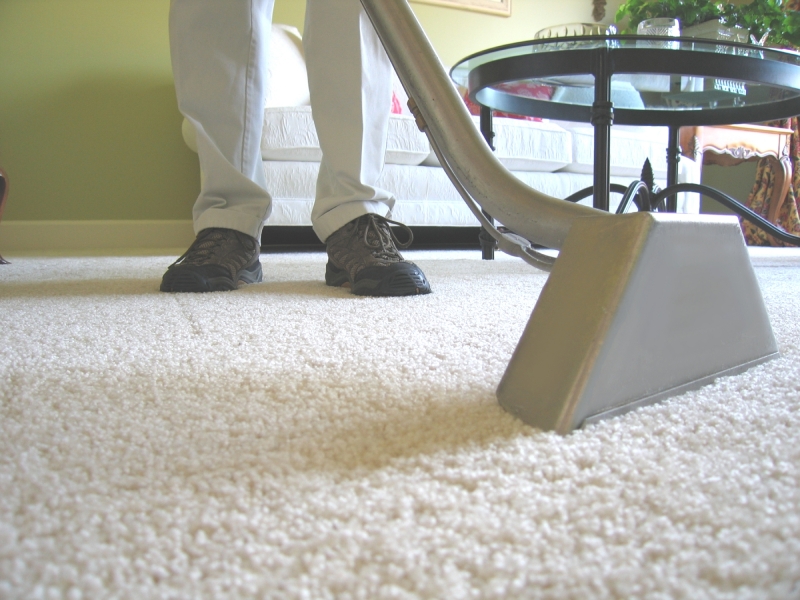
- If the carpet is being kept and reinstalled — typically higher-end wool or specialty fiber — professional carpet cleaning services use commercial-grade extraction and sanitation that home tools cannot match. The crew also gives an honest read on whether the carpet is genuinely worth saving.
When to Stop and Call a Professional
- Visible mold or staining covers more than ~10 sq ft (EPA threshold)
- One or more boards flex, cup, or sound hollow when tapped
- Subfloor inspection shows soft spots, dark staining, or active growth
- Musty smell returns within days of cleaning the surface
- The same area regrows within weeks of cleanup
- Anyone in the home reports respiratory symptoms tied to the affected room
- Contamination follows a flood, sewage event, or sustained leak
- Toxic black mold (Stachybotrys) is suspected
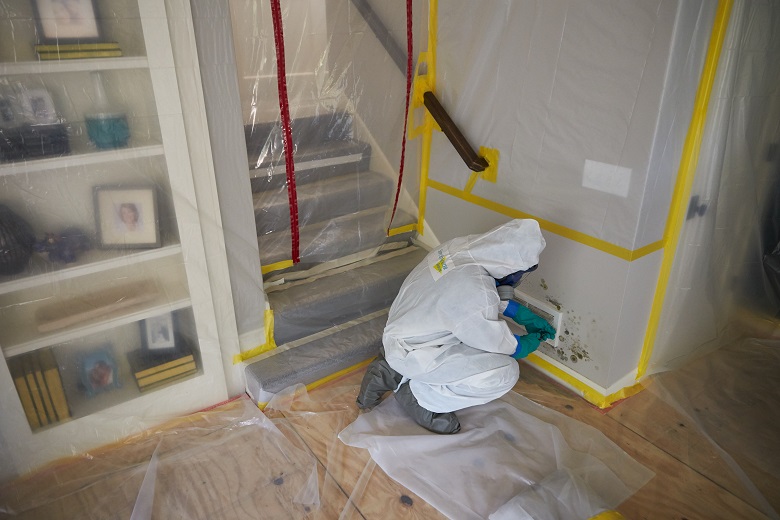
At that point the work moves from cleaning to remediation. Professional mold remediation services use containment plastic, negative-air filtration, regulated drying, and documentation an insurance carrier or future buyer can rely on.
How to Keep Mold Off Floor Boards Going Forward
- Hold indoor relative humidity between 35% and 50% year-round.
- Treat any spill as a same-day cleanup — wood absorbs water within hours.
- Avoid wet-mopping with standing water. Damp microfiber only.
- Lift area rugs and runners every season to inspect the boards underneath.
- Run a dehumidifier in basements, ground-floor rooms, and any space that smells musty after rain.
- Address window condensation early — repeated winter pooling shows up as mold the following year.
- Schedule routine professional carpet shampooer services for area rugs and adjacent-room carpet — keeping textiles clean prevents them from acting as humidity reservoirs that cycle moisture back into the floor.
How Fast Can Mold Grow on Wet Floor Boards?
- Mold begins establishing on damp wood within 24–48 hours under typical indoor temperatures.
- Visible growth often appears within a week of sustained moisture.
- Same-day water cleanup almost always prevents the problem entirely.
- Drying within 48 hours of a leak event typically stops mold from establishing — drying after 72+ hours often does not.
Indoor Air Quality Note
Mold can affect indoor air quality, particularly for people with asthma, allergies, or other respiratory sensitivities. Reactions vary by person and mold type. If anyone in the home has a known sensitivity, limit time in the affected room until cleanup is complete. For specific health questions, ask a doctor.
FAQs: Mold on Floor Boards
Can mold under the wood finish be cleaned, or do the boards need to come up?
Surface growth that hasn't penetrated the finish often cleans up with wipe-and-dry. Once the wood underneath is dark-stained or boards have cupped, the affected boards usually come up — sanding alone rarely reaches the contamination.
Will vinegar or hydrogen peroxide actually kill mold on hardwood?
Both work on surface growth at the right concentration with proper dwell time. Diluted white vinegar (1:1 with water) and 3% hydrogen peroxide are common. Neither handles sub-surface contamination — that's a different fix.
Should I refinish or replace floor boards with mold staining?
Refinish if staining is shallow and boards are structurally sound. Replace if the wood feels soft, staining returns through new finish, or the subfloor below is also affected.
How do I check if mold has reached the subfloor?
Lift a small section of board near the affected area and look directly at the subfloor. Indirect signs: high moisture-meter reading, soft or springy boards, musty odor that survives surface cleaning.
Is bleach safe to use on wood floor boards?
Generally not on bare or finished hardwood. Bleach damages the finish, lightens wood unevenly, and doesn't reach below the finish layer. Vinegar, hydrogen peroxide, and borax are safer and more effective.
How long does it take for mold to grow on wet floor boards?
24–48 hours under typical conditions. Same-day water cleanup almost always prevents the problem.
Can a regular dehumidifier dry out floor boards after a leak?
Helpful for room humidity but not designed to drive moisture out of saturated wood. Deep board or subfloor saturation needs professional drying equipment that moves much more air across the wood.
Do I need to evacuate the room while cleaning mold from floor boards?
Not for a small, contained patch with proper PPE. Pets, kids, and anyone with respiratory sensitivities should stay out until cleanup is done and the room is ventilated. Larger contamination calls for full containment and professional remediation.
What's the EPA threshold for DIY vs professional mold cleanup?
The EPA references roughly 10 sq ft as the upper limit for typical homeowner cleanup. Beyond that, containment, air filtration, and disposal need to be handled in a controlled way that calls for a remediation team.
If You'd Like a Professional Opinion
If the mold pattern looks bigger than this guide covers, if cleanup keeps repeating, or if you simply want a second look before deciding what to clean and what to replace, ServiceMaster of Kendall County offers no-pressure assessments. There's no obligation in asking, and a brief conversation can clarify whether what you're seeing fits within home cleanup or warrants hands-on remediation.
Call Us Today